Many commercial real estate deals still pencil using yesterday’s construction assumptions.
Then reality shows up: Utility delays stretch closings. Labor availability tightens schedules. Insurance resets operating costs. Material pricing moves after committee approval. Buildings deliver into crowded lease-up environments where average design underperforms.
By the time these issues become obvious, it’s often too late.
For developers pursuing multifamily, industrial, mixed-use, and retail deals in the NY/NJ metro, construction is no longer a downstream execution item. It is now a front-end underwriting discipline.
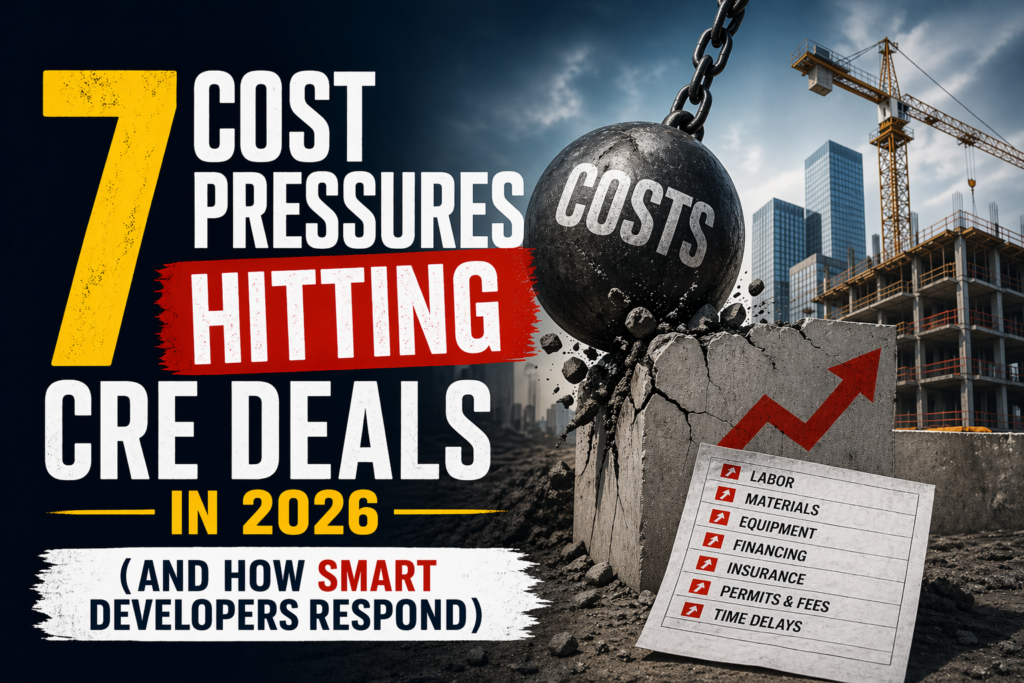
Here are seven risks reshaping 2026 deal economics, and how sophisticated developers are getting ahead of them.
1. Cost Escalation Can Create Multi-Million Dollar Budget Gaps
Prices are up again. Skanska’s Spring 2026 report shows their Composite Cost Index rose more than 6% in a year, driven by big jumps in electrical, plumbing, and HVAC trades (Skanska). The AGC says nonresidential input prices rose 8.4% in a year by May 2026, the fastest since the pandemic (AGC).
Metals are the main driver. Tariffs on steel, aluminum, and copper are now 50% (Tax Credit Advisor). Aluminum is up about 45% in a year. Copper is up about 29%. Steel keeps climbing too (Skanska).
A budget built even six months ago may be too low today. On a $30M project, that gap can run into the millions.
Smart developers do not lock a budget and walk away. They price it again close to the start. And they add a real cushion, not a token one.
2. Time Costs More Than Materials
Everyone watches hard costs. But delay is often the bigger threat.
When a job runs late, you keep paying. You pay interest on the loan. You pay for the site. And you miss the day you were supposed to start earning rent or sales.
Costs are set to keep rising 4% to 6% through 2026, and some trades will run higher (Tax Credit Advisor). So a six-month slip does not just delay income. It can push your build into a more expensive market.
Smart developers protect the schedule like they protect the budget. A tight, real timeline is not just nice to have. It is money.
3. Utility Power Delays Can Derail Delivery Dates
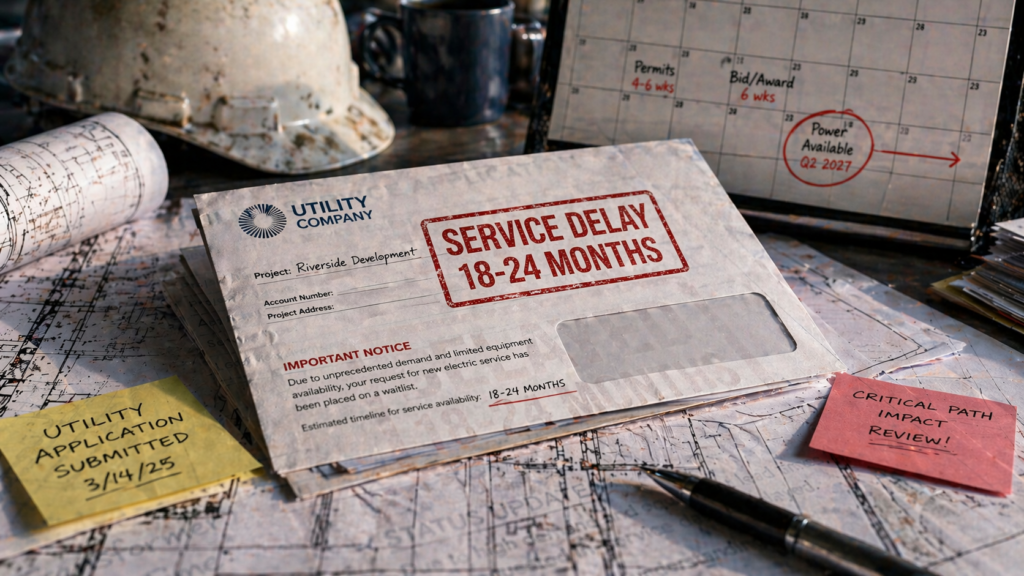
You can pour the slab. You can frame the building. But you cannot open the doors without power. And power is the slowest part of many jobs now.
The wait for big transformers hit a record. Power transformers now average 128 weeks. Some run up to four years (American Partisan). Con Ed’s own distribution transformers now run on a 12 to 18 month horizon (DistroForge).
Switchgear is tight too. Skanska says switchgear and pad-mounted transformers now run 60 to 100 weeks, and prices are set to rise 8% to 10% in 2026 (Skanska). Data centers are eating up the supply, and small projects wait in the back of the line (Quotr).
Smart developers call the utility on day one. Not month six. They order long-lead gear early, before the deal even closes if they can.
4. Industrial Demand Is Strong, But Plain Boxes Sit.
Warehouse space in North Jersey is still in demand. But the market split in two.
Overall North Jersey vacancy is around 6% to 8% (Blau & Berg). But that number hides the real story. Small-bay space, under 100,000 square feet, is very tight at about 4.4%. Big generic boxes are softer (Newmark).
The lesson is clear. Location and layout win. Space near the ports, the Turnpike, and dense population leases fast. Plain space far from demand does not.
Smart developers do not just build a box. They build the right box, in the right spot, close to the customer.
5. Apartments Are Healthy, But Generic Buildings Lease Slower.
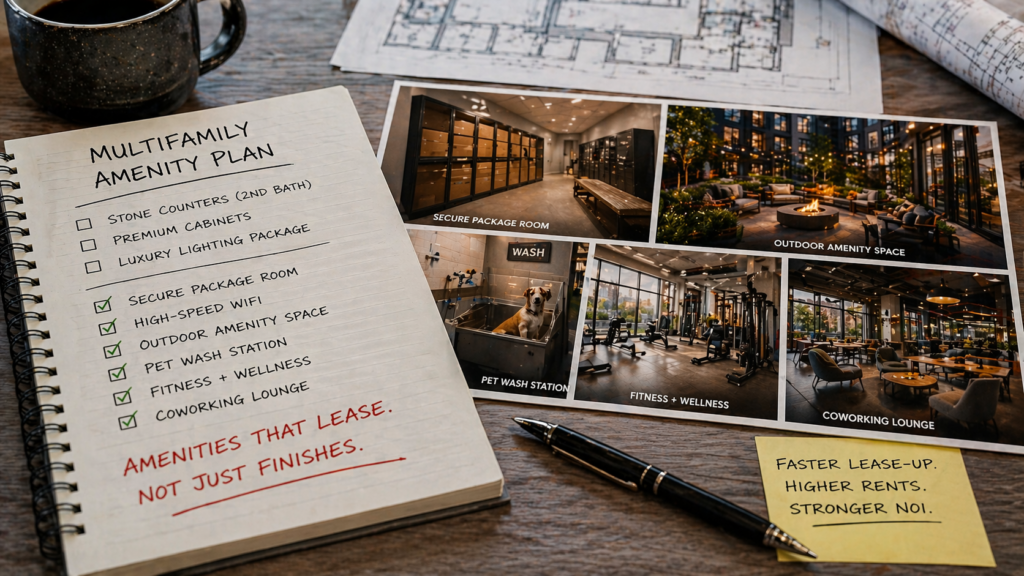
The North Jersey apartment market is stable. Demand is healthy, and rents stay high thanks to strong incomes and closeness to New York (Matthews). But a lot of new supply is coming, so landlords cannot push rents like before.
New luxury buildings feel it most. When many open at once, the plain ones lease slowest. Renters now expect real amenities, and amenities matter more than ever in 2026 (Grace Hill).
In NYC, tax programs shape what gets built. The 485-x program can give tax breaks for up to 40 years based on affordable units (Citrin Cooperman). And the deadline for older 421-a projects was pushed to June 2031, giving stalled sites more time (Ariel Property Advisors).
Smart developers do not build generic. They design for what renters want, and they build to lease fast.
6. Insurance Is Now a Design Choice
Insurance used to be a line item you filled in at the end. Not anymore. Now it shapes the design.
Costs keep rising. In New Jersey, home insurance rose about 7.5% in 2025 alone, well above inflation (LendingTree). Nearly half the state’s home insurers asked to raise rates, some by double digits (NJ.com). For builders, liability and excess coverage stay hard to place, even as some property rates soften (GRIT Insurance).
The good news is you can lower risk with smart design. Building to resilient standards, like IBHS FORTIFIED, can help (IBHS). A tougher building can cost less to insure.
Smart developers bring insurance into the design talk early. They build to lower the risk, not just to pass code.
7. Retail and Grocery Deals Leave No Room for Missed Dates
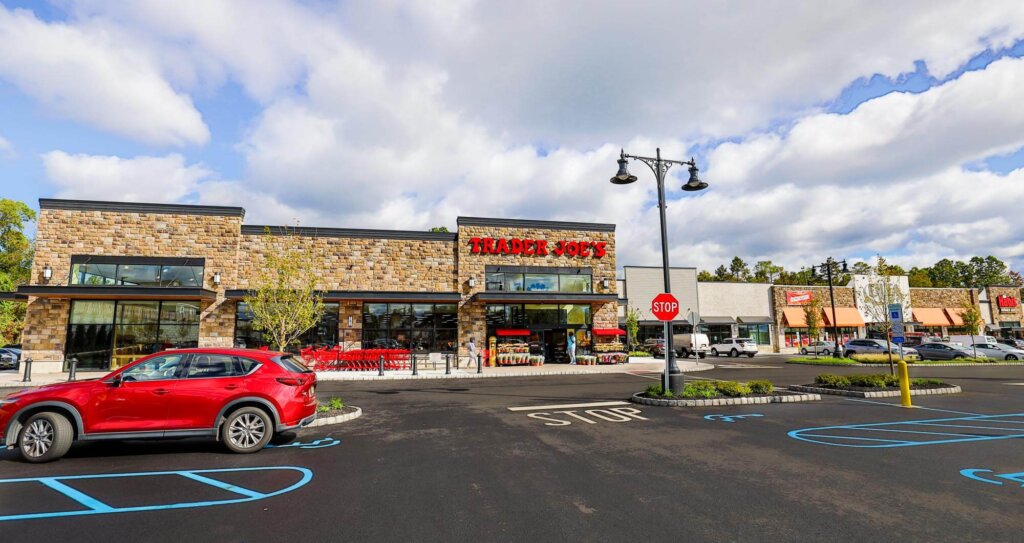
North Jersey retail is red hot. Vacancy is set to hit a new record low near 2.9%, the lowest of any major U.S. market (ROI-NJ). Grocery-anchored centers do even better, with vacancy near 4% and strong rent power (JLL).
That sounds great. But it raises the stakes. When space is this scarce and demand is this high, tenants sign leases with hard open dates. Miss the date, and you can lose the deal or pay a penalty.
Smart developers treat the open date as sacred. They plan every trade around it and leave no slack to chance.
Pre-Construction is Now an Underwriting Function
Notice the pattern. Every pressure above comes back to one thing: getting the plan right before you build.
Old budgets break. Delays cost more than materials. Power takes years. The wrong building sits empty. Insurance shapes design. And a missed date can kill a deal.
That means pre-construction is no longer just planning. It is underwriting. It is where you find the risk and price it, before you are committed.
A Better Way to De-Risk the Deal
The developers who win in 2026 do the hard thinking early. They price late and price real. They order power on day one. They design for the tenant, not the spreadsheet. And they protect the schedule like cash.
That is what strong pre-construction looks like. It is not a cost. It is your best insurance.
Building a $30M+ Project?
March Construction helps developers de-risk large commercial deals before the first shovel hits the ground. We bring real pricing, real schedules, and real answers early, when they still change the outcome.
Let’s talk before your next deal closes.
Sources
- Skanska Spring 2026 Market Trends Report — Composite Cost Index up 6%+, double-digit MEP trade escalation, metals pricing (aluminum +45%, copper +29%). Also the interactive version for the electrical gear 8-10% figure and 60-100 week lead times.
AGC of America (June 2026) — Nonresidential input prices up 8.4% YoY, fastest since the pandemic.
American Partisan / Wood Mackenzie data — Power transformer lead times at a record 128 weeks, some up to 4 years. Paired with DistroForge for Con Ed’s 12-18 month distribution transformer horizon.
Marcus & Millichap via ROI-NJ (March 2026) — North Jersey retail vacancy heading to a record-low ~2.9%, lowest of any major U.S. market.
Newmark Q4 2025 NNJ Industrial Report — The industrial split: small-bay tight at ~4.4%, big boxes softer.
Tax Credit Advisor Q2 2026 Cost Update — 50% metals tariffs and the 4-6% baseline escalation forecast through 2026.
LendingTree State of Home Insurance 2026 and NJ.com — NJ insurance up ~7.5% in 2025, nearly half of insurers filing for hikes.