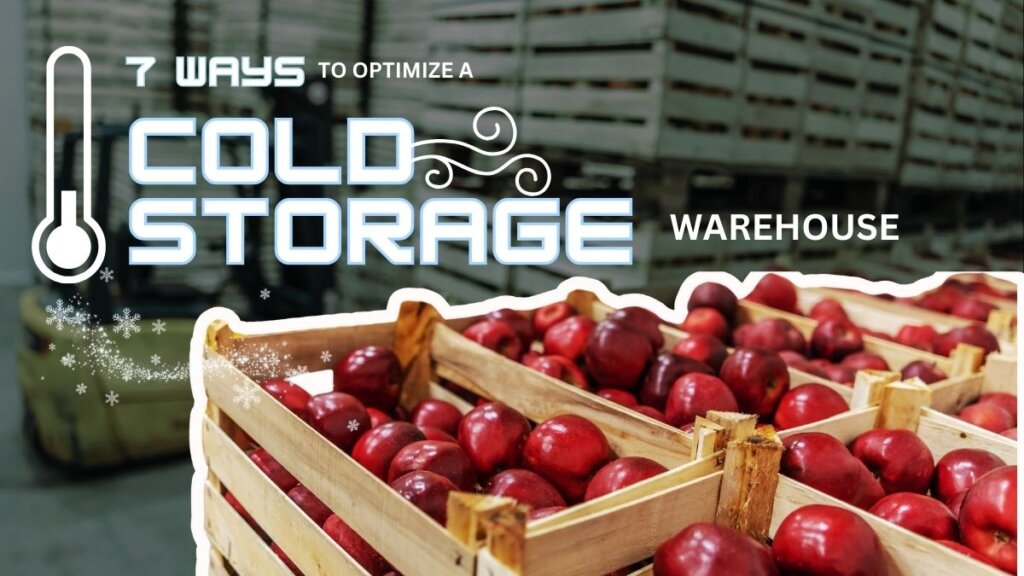
As the warehousing industry experiences a slowdown, the demand for specialized storage solutions remains robust, particularly in sectors requiring cold storage.
Insatiable consumer demand for fresh food, pharmaceuticals, and temperature-sensitive products means that cold storage facilities must be more efficient and reliable than ever before.
That’s why industrial developers are investing in data centers and cold-storage facilities to meet market demand.
Development challenges are compounded for cold storage facilities, which must ensure that temperatures stay within an acceptable range for sensitive products.
With this in mind, keep reading as we explore the best ways to optimize cold storage warehousing design.
1. Location and Situation are Critical

Outdoor elements, like the sun, can be the worst enemy of a cold storage facility.
Constantly battling solar radiation and other environmental factors to keep the structure cool will skyrocket your energy costs.
As such, building orientation is one of the first considerations for designing an efficient cold storage warehouse.
There are three overarching factors to keep in mind:
- The sun – the best path for sun daylighting is unfortunately the worst path for solar radiation. Make sure that there are no critical walls or windows facing due south to limit heat gain.
- Wind patterns – in most cases, positioning the shortest axis of the building parallel to the prevailing wind patterns will provide the most passive ventilation.
- Topography – positioning the building near shade trees or bodies of water will provide a cooler environment for the building.
To help leverage the building’s orientation, architectural sunshades, portable awnings, and commercial louvers are other passive features that can assist in keeping interior temperatures manageable.
2. Choose Highly Durable Building Materials

High quality materials are important for any long-lasting structure, especially cold storage warehouses.
The less time dedicated to maintaining, repairing, and/or replacing low quality structural components means more time spent focusing on key business operations.
In addition, maintaining consistent temperature control is paramount. Any disruption in the structure could lead to temperature fluctuations, potentially spoiling precious cargo.
Steel buildings are a top option in this regard for cold storage facilities.
They are incredibly long-lasting and are resistant to fire, extreme weather, pests, and any other threat Mother Nature has to offer.
This durability ensures that the cold storage environment remains stable, protecting the goods stored inside.
They do not require painting or staining and can be cleaned with a semi-annual pressure wash to knock away any standing debris, reducing the risk of contamination.
Other durable materials that can lower maintenance requirements for warehouses include epoxy terrazzo floors, which are easy to clean and resistant to chemicals and moisture, stainless steel door and bathroom fixtures that prevent rust and corrosion in high humidity environments, and hurricane-grade storm windows that protect against extreme weather conditions, ensuring the facility’s integrity and the safety of its contents.
Learn more by reading “Top 2024 Picks: Strong and Durable Commercial Building Materials.”
3. Insulation, Insulation, Insulation

Insulation is a fundamental component in creating energy-efficient structures that resist drastic ambient temperature changes.
Even if you use some of the best insulation for exterior walls when designing a cold storage warehouse, there’s still more to consider.
The proper installation of insulation around foundation walls and within flooring/roofing substrates can prevent heat transfer at unexpected locations.
In addition to creating a more stable thermal environment, quality insulation will also play a key role in limiting moisture diffusion and pest infiltration, helping keep the facility sealed.
Read this article How to Improve Energy Efficiency with HVAC-Friendly Materials to learn more about building insulation.
4. Design for Easy Waste Removal

Commercial warehouses have tons of excess packaging.
Cardboard boxes, shipping pallets, padding–it can accumulate in a hurry if not properly accounted for.
As such, it is vital to design the building with waste removal in mind.
Have ample receptacles for employees to quickly and efficiently dispose of landfill and recycling waste.
This will keep the warehouse floor clear at all times, limiting tripping hazards.
In addition, as many cold storage warehouses are connected or otherwise associated with a food production facility, it is paramount to provide an infrastructure for safe removal of food waste.
Specifically, all drains and grease traps must be regularly serviced to prevent clogging city pipelines.
Partnering with a hydrovac service team is a great way to safely and efficiently remove any bulk spills, grease buildup, or any other type of toxic product from a warehouse site.
There also may be hazardous material disposal considerations for medical supply storage.
5. Optimize Vertical Space

Warehouses used to be sprawling complexes in vacant fields in the middle of nowhere.
However, with the e-commerce boom, mobile fulfillment center-style warehouses are in demand closer to end customers.
As land is more expensive the closer you get to population centers, modern warehouses are becoming conspicuously more vertical to increase square footage on smaller plots.
Check out some of our multi-level warehouse builds, such as The Borden Complex, in our portfolio.
Intricate racks and shelves leverage vertical storage space and facilitate automated picking and packing.
Mezzanines and additional stories are adding floor space to structural steel warehouses.
Outside, commercial railings are securing flat roofs for temporary storage and packing space.
6. Expand Space in Loading Areas

Modern cold storage warehouses must accommodate a continual stream of delivery trucks and couriers. Build the facility with expanded loading bays and wider doors.
This can provide more leeway for staging and truck loading to appease time-sensitive consumers. Widen lanes and access roads to accommodate two-way traffic and backing into tight spots for delivery vehicles.
7. Improve Cold Storage Warehouse Efficiency through Impactful Design
Although demands for cold storage warehousing space are higher than ever, they can be effectively met through strategic site design.
From deliberate building orientation to more spacious loading areas, consider any of the ideas listed above to help your cold storage warehouse operate as efficiently as possible.
For more of the latest trends shaping the commercial construction landscape, visit March Construction for the leading insights in the industry.

Author Bio
Brian Jeffries is a freelance writer who loves sharing his knowledge and expertise on construction projects and materials. He lives in Winter Park, Florida where he enjoys spending time with his wife and working on projects in his spare time. Brian’s work as a freelance writer can be found on Building Product Advisor, a construction industry resource site.